TMI: CALL ME
1. Do you still have a land line?

No, I got rid of it when I retired almost 7 years ago and no
longer needed a fax machine. I would
have done it earlier because I hated all those annoying calls at dinnertime.
2. Which cell phone do you use and why?

I have had a Samsung Galaxy Note II for exactly one year
now. Being a smartphone, I cannot believe
how much less I use my computer now. It is a wonderful gadget and I spend
entirely too much time playing with it, especially playing Solitaire.
3. Which provider do you use? Is there really a difference?
AT&T, which I have been using for many years. One reason is that they have a cell tower
very close to my farm in rural NC and I get great service everywhere I go.
4. If you call someone and they don't pick up, do you leave
a message?
Most of the time. But
phone tag (voicemail) can become very frustrating.
5. When you have a missed call (with no message), do you
call the person back?
Almost never, but yesterday my doctor’s office called
without leaving a message, so I did call them back later.
6. Do you txt willingly or reluctantly? How are your skills?
The only person that I text with is my older son, because he
loves to text and does not like to talk on the phone. I would rather talk than text. I am pretty good at texting, because my phone
completes words and makes suggestions, so I can be pretty quick.
7. Has your cell replaced your camera?
Pretty much as it has more pixels than my Nikon point and
shoot, which is about 8 years old. And I
take more pictures now because it is always with me. For the past two months, I have been
undergoing wound (ulcer) treatment on my leg, which doesn't want to heal
because of lymphedema and diabetes. Twice a week when I go to physical therapy
to get my leg unna booted, I take pictures of the wound with a tape measure to
document any improvement. I now have a
whole folder of those photos.
_resized.png) |
| measuring the ulcer |
 |
| unna boot on my left leg |
8. Selfies....
In my case they provide too much age related TMI, but since
you asked . . .

9. How many apps do you have? Which is your favorite and
why?
Wait, while I count . . . uh, 45. Some are medically related such as keeping
records of my blood glucose levels, my INI (blood thinner) levels, etc. My favorites are reading emails, news
articles, and of course, the aforementioned Solitaire.
10. What would life be like with no cell/smart phone for one
month?
I would go stark raving mad, because I even read books on my
phone or my Kindle. Don’t need it much
as a phone, but I surely do like all the other apps.

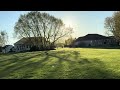
 This farm has been in my family since before the Civil War and has been divided many times among Moore descendants, and my portion today is 70 acres. My great-great grandfather settled here, and he was the grandson of Stephen Moore of Mt. Tirzah. See the Stephen Moore blog post. My mother, Sara, and her siblings (Alma, Jenny, Lula, and Bill) grew up in a log cabin on a site just to the east of the current frame house.
  The log cabin in this picture was built by my Uncle Bill and he alternately lived between the “big” house and this four room cabin.
  In 1925, the family’s log cabin burned to the ground. Lore has it that my grandmother (Rosa) carried her new Singer sewing machine out the door on her back. That machine must have outweighed her 125 pound frame. The family members split up among nearby relatives until the new house could be built. My grandmother loved to tell stories and she gives this account of why my grandfather died in August that year. She was very superstitious and believed his death occurred because he started a project (cutting lumber for the new house) on a Friday! Her superstition said that “if you could not finish whatever you start on a Friday, you would not live to see its completion!” She has had me so convinced that even today I will not start reading a book on a Friday. It is said that it was such a cold day in August (1925) when they buried my grandfather, that they had to light a fire in the stove to keep warm. The house was built and the family was reunited. It consisted of four rooms and a hall. At this time, there was no kitchen, for fear of fire – so the kitchen was a separate building behind the house.
  A few years later, Uncle Bill, who was a carpenter, added a kitchen, pantry, and back porch. The cabinets you see here were built by Uncle Bill also. Later still around 1950, Aunt Alma had two more bedrooms finished upstairs. 1948 was a big year because electricity reached the farm, and the house was wired. Until then, there had been no indoor plumbing, bathroom, etc. The back porch was enclosed and a bathroom was built. This occurred when I was five years old and I still remember when the overhead lamp in the big room burned kerosene. Aunt Alma would light a fire in the refrigerator; I still have a hard time explaining how a fire in that contraption could produce ice. Originally there were two bedrooms downstairs – Grandma slept in one of them and Aunt Alma slept in the other. Bill, the only other family member living at home, either slept in the big room – today the dining room, or later upstairs in the west bedroom. My sons, Greg and Brian, have both told me separately of “footfalls” they have heard when sleeping upstairs and they have been the only ones in the house. Does Bill still roam around? I have not heard him. Since I took over the house in 1985, I have added some modern conveniences, but I have tried to keep all the original character of the home, including not painting the front two rooms and hall.
 An abundance of wildlife lives there including deer, foxes, raccoons, and wild turkeys. Here you can strain your eyes and see the turkeys in the field beside the house, a picture that I took from the dining room window.
 This road has tobacco curing barns to the side and cuts through the woodlot. This woodlot had the large timber cut about 20 years ago and planted with pines for wood production. When you arrive at the fields on the highest point on the property, you may see soybeans or tobacco growing.
 A neighbor farmer now tills the fields and takes care of the land. Some years, you may see corn or wheat growing as he rotates the crops, but this is still primarily a working tobacco farm.






 Posts
Posts